
Key Takeaways
Learning how to overcome fear is less about removing discomfort and more about responding to it differently.
Avoidance tends to strengthen hesitation, while consistent action gradually reduces it.
Confidence usually develops through experience rather than certainty beforehand.
Smaller, repeated steps are often more effective than waiting to feel fully ready.
Most discomfort does not appear during genuine danger. It appears when something feels emotionally exposed, uncertain, or personally important.
People often respond by shrinking their world slightly. They delay decisions, overprepare for situations that rarely go badly, stay quiet during meetings, or remain inside familiar patterns simply because familiarity feels safer than change.
Learning how to overcome fear is not about never feeling afraid. It is about recognising when hesitation starts narrowing behaviour before it quietly turns into habit.
What Is Fear?
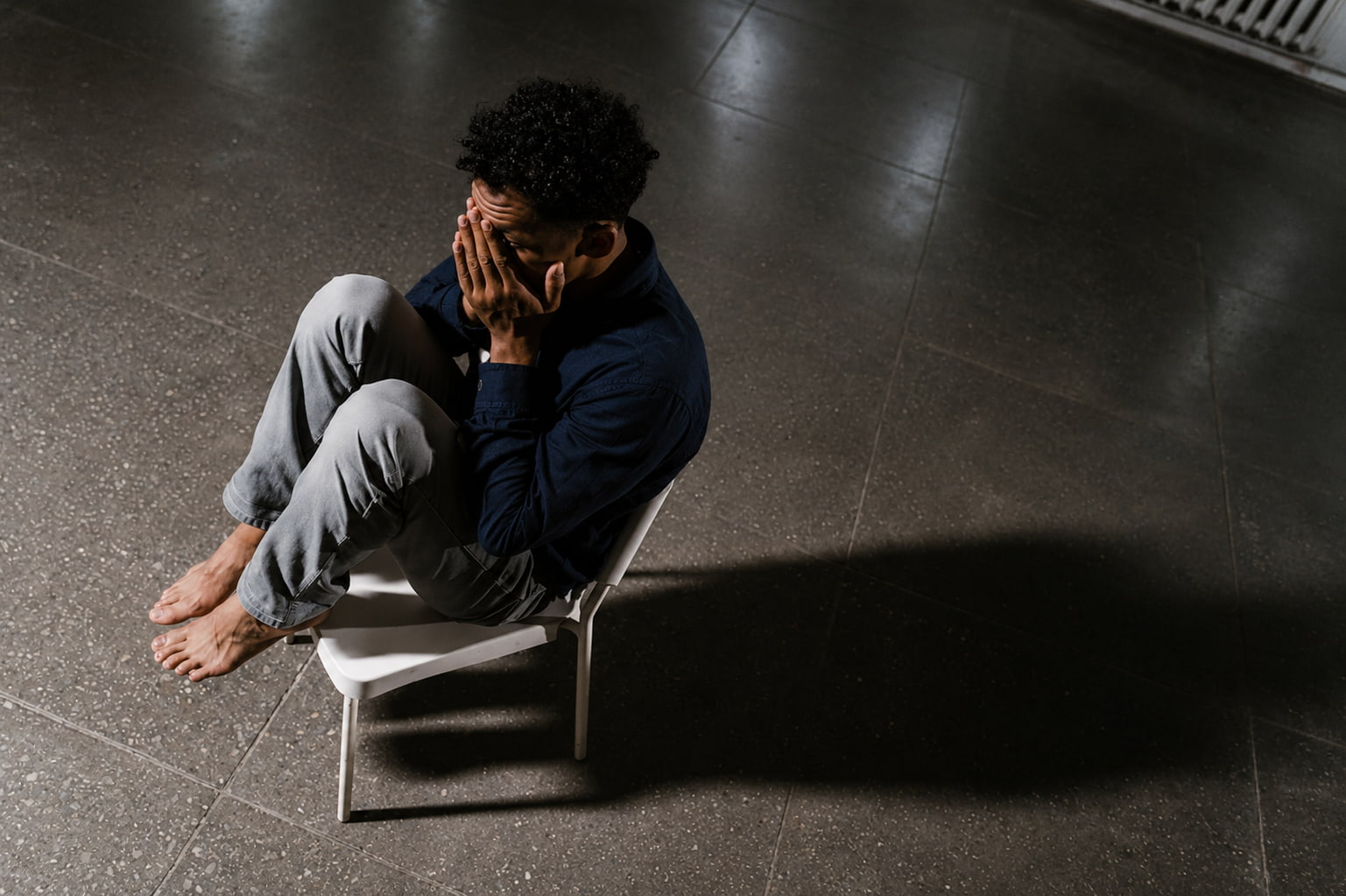
The body is designed to react quickly to potential threat. In genuinely dangerous situations, that reaction is useful. Fear becomes more complicated when the same response appears before a presentation, a new environment, a difficult conversation, or any situation carrying emotional pressure or uncertainty.
Physical changes often happen almost immediately. Heart rate increases, breathing shifts, muscles tighten, and attention narrows towards the perceived problem. These reactions feel convincing, which is why people often respond as though the experience itself is dangerous even when the actual risk is relatively low.
Fear, Anxiety, and Phobias Are Not the Same
Although these experiences are often grouped together, they do not affect people in exactly the same way. The differences usually involve what triggers the response, how long it lasts, and how strongly it interferes with daily life.
Experience | Common Trigger | Typical Pattern | Everyday Impact | Example |
Fear | Immediate situation or perceived threat | Short-term and reactive | Usually linked to a specific moment | Public speaking before a presentation |
Anxiety | Anticipation, uncertainty, or imagined outcomes | Ongoing or recurring | Can affect thinking, sleep, focus, or decision-making | Constantly worrying about future problems |
Phobias | Specific object, environment, or experience | Intense and persistent | Often leads to strong avoidance behaviour | Extreme fear of flying or confined spaces |
Why Fear Feels Bigger Before Action Happens
Anticipation is often more uncomfortable than the experience itself. Before something difficult happens, the mind tends to fill gaps with imagined outcomes, many of which never actually occur.
A situation that is still uncertain can quickly start feeling definitive in the imagination. Small risks become catastrophic ones. Temporary discomfort starts feeling permanent. By the time the real moment arrives, the fear surrounding it has often been building for far longer than the situation itself lasts.
This is why avoidance feels temporarily relieving. Stepping away from the situation reduces immediate tension, but the mind rarely leaves it alone for long. The unresolved pressure usually returns later with even more emotional weight attached to it.

How Fear Shapes Behaviour
The most visible fears are easy to recognise. Fear of heights, public speaking, or confrontation usually announces itself clearly. More often, though, hesitation appears in quieter and more socially acceptable ways.
Common examples include:
Procrastinating on decisions that feel emotionally important
Overpreparing for situations that are unlikely to go badly
Waiting to feel fully ready before starting something new
Staying invisible in professional or social settings
Seeking constant reassurance before taking action
These patterns often influence larger decisions over time. Someone stays in a job that no longer suits them because changing direction feels exposing. Another avoids opportunities they are qualified for because rejection feels harder to tolerate than remaining where they are.
None of these responses make someone weak or incapable. Most begin as protective habits that temporarily reduce tension. The difficulty is that repeated avoidance gradually narrows behaviour, and eventually the gap between potential and action becomes wider than most people realise.
Why Avoidance Makes Fear Worse
Stepping away from something uncomfortable can feel relieving in the moment, but the tension usually returns quickly.
A person who avoids speaking after one bad presentation often becomes more self-conscious the next time they try. Someone who postpones a difficult conversation usually spends longer thinking about it than the discussion itself would have lasted.
Over time, the brain starts treating avoidance as proof that the experience was genuinely threatening. Confidence shrinks, hesitation grows, and the discomfort surrounding it becomes harder to separate from reality.
In Breaking Free from Fear at Gladiator Summit III, entrepreneur Jigar Sagar spoke about how safety and fear can sometimes limit people in similar ways, especially when avoiding discomfort slowly becomes habitual.
Familiarity is what usually lowers fear. Repeated contact, even imperfectly, makes difficult experiences easier to handle in ways that thinking about them alone never will.

How Small Action Changes Fear
Fear usually becomes smaller through experience, not through waiting. The longer you avoid something, the more unfamiliar and intimidating it tends to feel.
This is why smaller actions matter. A smaller step is easier to do consistently, and repetition is what makes difficult situations feel more manageable over time.
That can look like:
Speaking once during a meeting instead of staying silent
Replying to the difficult message instead of rewriting it repeatedly
Attending the event briefly instead of avoiding it entirely
Applying for the opportunity before feeling fully prepared
The goal is not to remove discomfort immediately. It is to stop treating discomfort as a reason to avoid action altogether.
10 Actionable Steps to Overcome Fear
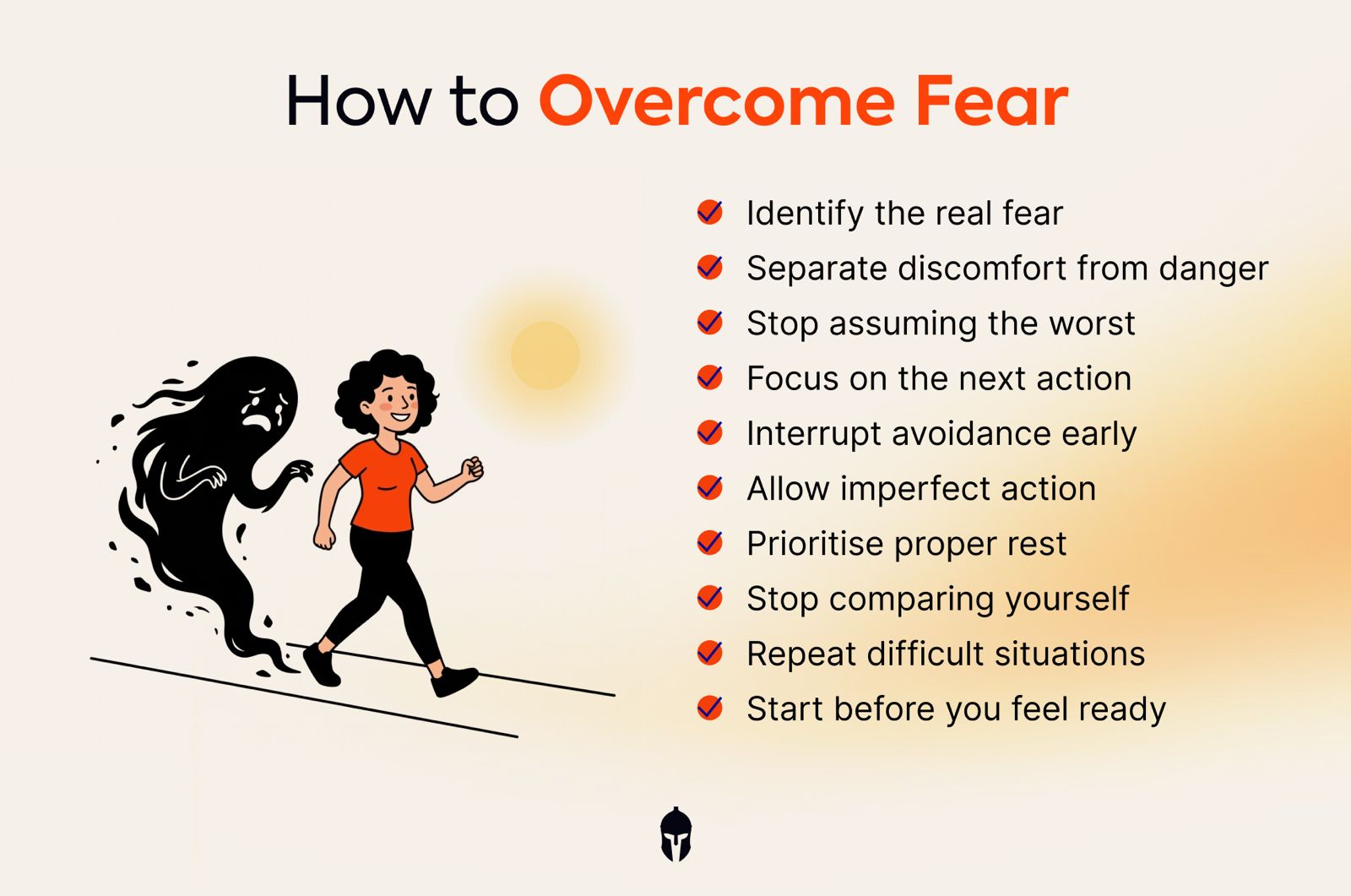
1. Identify the Real Fear Behind the Situation
Before avoiding something, stop and ask yourself what the real concern is.
Are you worried about embarrassment? Rejection? Looking inexperienced? Losing control? Being judged? The clearer you are about what you are reacting to, the easier it becomes to respond to it directly instead of avoiding the situation altogether.
2. Stop Mistaking Discomfort for Danger
Before stepping away from something uncomfortable, ask yourself whether the situation is actually unsafe or simply new.
Sending the honest message, starting a conversation with someone new, trying something unfamiliar, or putting yourself in a visible position can create tension without placing you in real danger. In one discussion, Marisa Peer explained how the mind naturally moves towards what feels familiar and away from discomfort, even when the situation itself is not genuinely dangerous.
Learning to recognise that difference makes those moments easier to handle over time.
3. Stop Assuming the Worst-Case Outcome
Instead of replaying the worst possible result repeatedly, focus on what you would actually do if things did not go perfectly.
You might feel awkward during the conversation, get rejected for the opportunity, or make a mistake while trying something new. Most situations become easier once you stop treating those outcomes as permanent damage and start treating them as experiences you can recover from.

4. Focus on Action Instead of Perfect Outcomes
Choose one action you can take instead of trying to control every possible result beforehand.
That might mean sending the message, introducing yourself first, posting the work before it feels perfect, or attending the event even if you stay briefly. Action creates experience, and experience usually reduces hesitation more effectively than overthinking ever does.
5. Stop Avoiding Uncomfortable Situations
The longer you keep stepping away from something, the harder it usually becomes to return to it later.
If you notice yourself repeatedly delaying, cancelling, or avoiding the same thing, interrupt the pattern early. Reply to the message, show up briefly, or take the smaller version of the step instead of avoiding it completely.
6. Let Yourself Do Things Imperfectly
Waiting until you feel fully prepared usually delays action longer than necessary.
Post the work even if it is not flawless. Return to the gym even if your performance has dropped. Speak up even if the wording is not perfect. Experience comes from doing things imperfectly, not from preparing endlessly beforehand.
7. Improve Sleep to Reduce Exhaustion
Fear feels harder to manage when you are already physically drained.
Poor sleep, constant stress, and overworking yourself can make ordinary situations feel far more overwhelming than they actually are. Before assuming you cannot handle something, pay attention to whether exhaustion is amplifying the reaction.
8. Stop Comparing Yourself to Other People
Do not assume other people feel comfortable simply because they appear confident externally.
Most people are managing uncertainty privately while becoming more experienced through repetition. Instead of measuring yourself against how someone else appears, focus on building more experience in the situations you currently avoid.
9. Repeat Difficult Situations Quickly
Do not wait too long before trying again after doing something difficult.
If you spoke up once, do it again soon. If you attended the event, return before the hesitation grows again. Repeating the experience while it still feels familiar usually makes the next attempt easier.

10. Take Action Before You Feel Ready
Do not wait until all nervousness disappears before starting.
Send the message while you still feel uncertain. Show up even if you still feel awkward. Start before confidence fully arrives. Most people who handle fear well are not waiting to feel comfortable first. They have simply learned how to act before that feeling appears.
In one discussion, actor and author Sean Kanan referenced the idea that “the treasure that you seek exists in the cave that you fear to enter”, highlighting how growth often requires moving towards discomfort instead of away from it.
How to Build Confidence Despite Fear
Confidence usually develops through experience rather than certainty beforehand. People who appear confident still experience hesitation and pressure, but they continue showing up anyway. Gradually, those experiences build self-trust.
When Fear Is Useful
Not every uncomfortable reaction means you should stop. Feeling nervous before a major decision, entering unfamiliar territory, or setting a difficult boundary can sometimes be a sign that the situation deserves careful thought rather than immediate avoidance. The goal is not to remove every uncomfortable feeling, but to recognise when caution is useful and when fear is simply limiting action unnecessarily.
Why Fear Cannot Be Eliminated Completely
Most meaningful decisions will continue to involve some level of uncertainty, discomfort, or risk. Learning how to overcome fear is not about removing those feelings completely. It is about recognising that hesitation does not always need to control your decisions or direction.
The people who move forward consistently are usually not completely certain first. They have simply become more willing to continue despite discomfort.
Frequently Asked Questions