Key Takeaways
Body type concepts are most useful when they help explain patterns rather than define limitations.
Ectomorph, mesomorph, and endomorph classifications describe general tendencies in muscle development, fat storage, and recovery.
Most individuals display a combination of characteristics that continue to shift through age, lifestyle, stress, and activity level.
Long-term wellbeing depends more on realistic routines, recovery, movement, and eating habits than on fitting neatly into any single category.
Many people follow similar fitness routines, eat comparable foods, and put in consistent effort, yet see very different results. One person gains muscle quickly. Another struggles to lose weight despite months of training. A third stays naturally lean but finds strength difficult to build.
This is not simply discipline or motivation. Bodies respond differently to food, exercise, recovery, and stress. The concept of body types attempts to explain some of those differences through general physical tendencies. While it is not an exact science, understanding these patterns can help explain why certain approaches feel effective for some individuals and frustrating for others.
What Are Body Types?
The body type framework, often referred to as somatotypes, was developed in the 1940s by psychologist William Sheldon as a way of observing common physical patterns between individuals. While parts of the original theory are now considered outdated, the concept remains widely used to describe general characteristics in body composition and response to exercise.
Ultimately, these labels are intended to describe broad patterns rather than strict biological rules. Physical traits often overlap, shift over time, and change through lifestyle, age, activity level, and daily habits. The model is most useful as a guide for understanding tendencies, not as a permanent label or limitation.
Why Body Types Influence Health and Fitness Differently
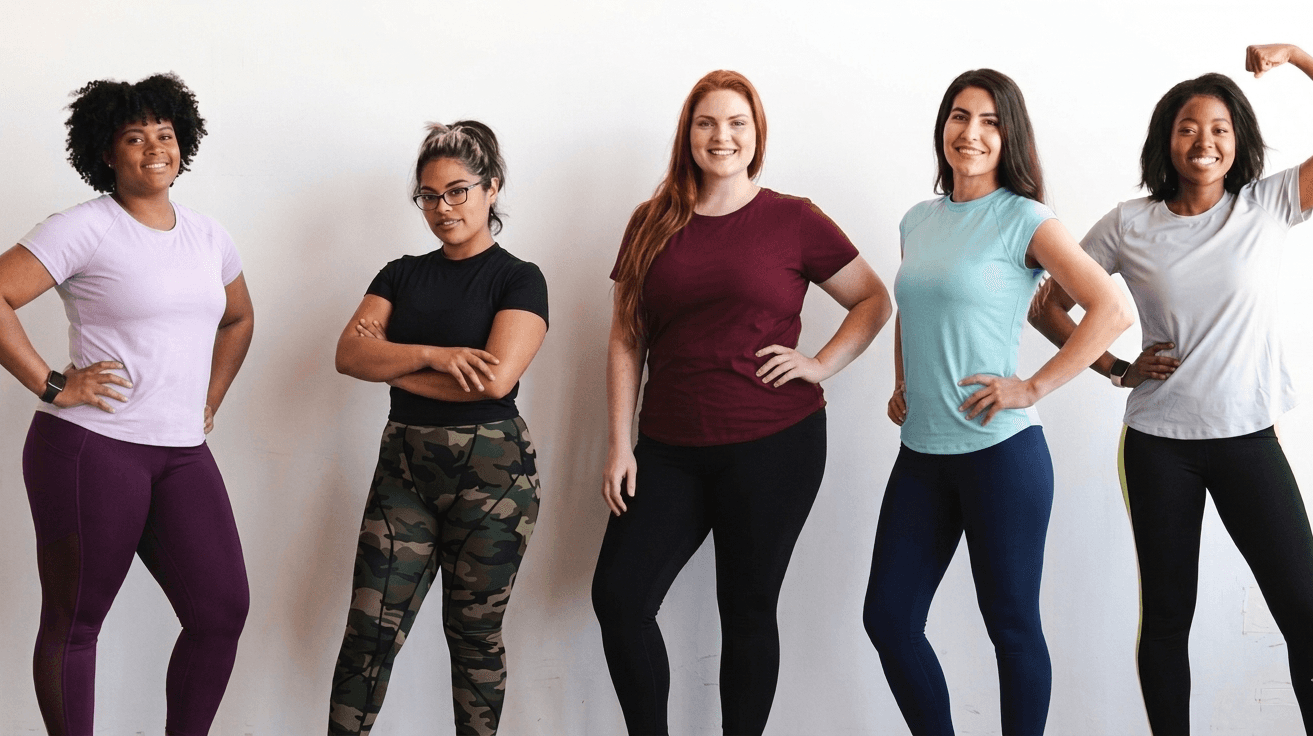
Two people can follow the same training programme and eat similarly, yet see very varied results. One builds muscle quickly. Another puts in equal effort and sees much slower progress. Neither is necessarily doing something wrong.
These differences often appear in everyday ways:
Gaining strength quickly but struggling with endurance
Recovering well from long sessions but seeing slower physical changes
Noticing weight changes easily after small increases in calories
Responding well to cardio but finding muscle gain difficult
These patterns reflect real differences in how the body handles food, recovery, energy use, and physical stress. Most recognise some of these tendencies in themselves long before understanding why they happen.
This is why copying someone else's routine too closely often leads to frustration. A programme may work extremely well for one individual but feel unsustainable or ineffective for another. Understanding how your body typically responds makes it easier to choose approaches that fit how your body actually responds rather than forcing methods built around someone else’s experience.
What Are the Three Main Body Types?
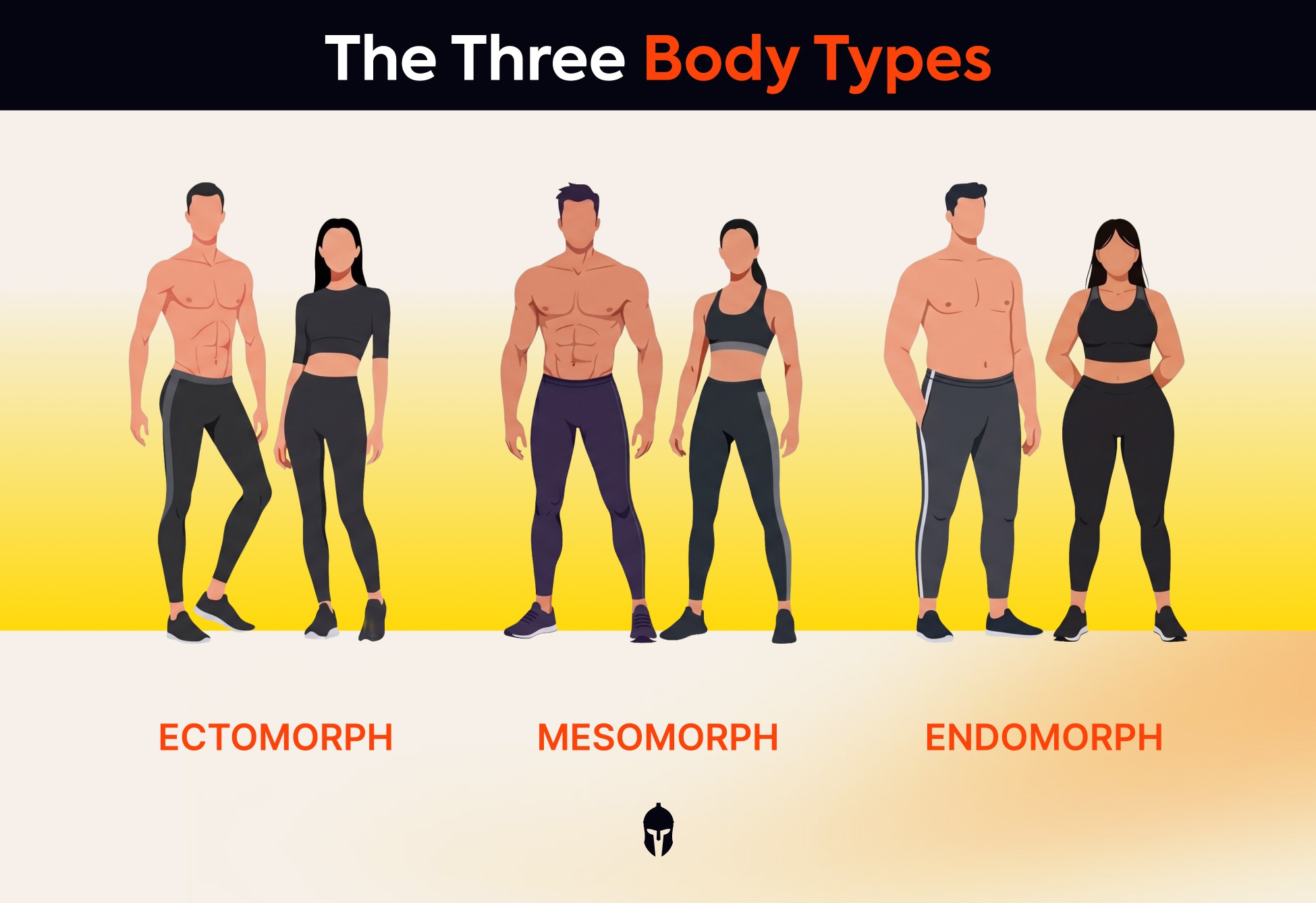
These categories describe general tendencies in fat storage, muscle development, and recovery, though most people display a mix of traits.
Ectomorph
A leaner frame, lower fat storage, and difficulty gaining size are commonly associated with the ectomorph body type. Calories tend to be used quickly, which can make visible progress feel slower even with regular eating and exercise.
In everyday life, this may look like eating frequently without much visible weight change or spending months in the gym before noticeable growth appears. Longer cardio sessions also tend to feel easier to sustain than heavier resistance-based workouts.
For ectomorphs, recovery and adequate nutrition matter as much as activity itself. Undereating is common, often without realising it, which can make long-term progress harder to sustain.
What Often Works Best for Ectomorphs
Prioritising resistance-based workouts if you struggle to gain size despite regular exercise
Eating at more consistent times when appetite alone is not enough to support energy and recovery
Allowing enough rest between sessions if physical progress feels slower than expected
Mesomorph
A naturally athletic frame, easier muscle development, and quicker physical response are commonly linked to the mesomorph body type. Visible changes often appear sooner, even with relatively moderate effort.
In everyday life, this may look like noticing clear improvements within a few weeks of returning to the gym or maintaining strength more easily during periods of reduced movement.
For mesomorphs, the challenge is often maintaining structure once results begin to appear. Faster physical change can create the impression that recovery, nutrition, and routine matter less than they actually do. But long-term performance still depends on sustainable habits, proper rest, and regular movement over time.
What Often Works Best for Mesomorphs
Maintaining structure even when your body responds quickly to exercise
Balancing intense workouts with enough sleep, mobility work, and downtime
Avoiding the assumption that natural athletic ability removes the need for routine

Endomorph
A broader frame, easier fat storage, and slower metabolic response are commonly associated with the endomorph body type. Weight fluctuations often become more noticeable during periods of reduced movement or irregular eating patterns.
At the same time, many endomorphs respond well to resistance-based exercise and can build strength effectively with the right structure. The challenge is usually not gaining muscle, but balancing physical development alongside fat management.
For endomorphs, long-term habits tend to matter more than aggressive dieting. Extreme restriction is often difficult to sustain and can lead to repeated cycles of short-term progress followed by setbacks. More balanced routines built around regular movement, structured meals, and steady exercise usually produce more reliable long-term outcomes.
What Often Works Best for Endomorphs
Creating steadier eating habits if restrictive dieting becomes difficult to continue long term
Combining resistance-based workouts with regular movement throughout the day
Focusing on habits you can realistically continue instead of chasing rapid physical change
Why Most People Are a Combination of Body Types
Clear examples of a single body type are less common than the framework suggests. Most individuals display a mix of characteristics, and those attributes can shift over time through age, lifestyle, stress, activity level, and long-term habits.
Someone who stayed naturally lean in their twenties may find fat storage becomes easier later in life. Another person may develop a more athletic build after years of regular strength training despite previously identifying more closely with endomorph traits.
These categories are useful for recognising broader physical trends, not for defining identity. A lean frame does not automatically prevent fat gain, and easier muscle development does not always make weight management simple. Human physiology is more flexible and complex than any three-category system can fully capture.

Common Misunderstandings About Body Types
Online discussions have reduced body types into rigid labels that often create unrealistic expectations and misleading comparisons.
Physical Appearance Does Not Reveal Overall Health
A lean build is not automatic proof of healthier habits, just as a broader frame does not reflect laziness or poor self-control. Genetics, sleep, stress, hormones, lifestyle, and personal history all influence physical appearance in ways that cannot be judged accurately at a glance.
Somatotypes Were Never Meant to Be Exact Categories
The original model was designed to describe broad physical tendencies, not define fixed limits. It can help explain general patterns in areas such as fat distribution, recovery, or muscle development, but it cannot predict someone’s long-term outcomes with precision.
Online Transformations Rarely Show the Full Picture
Before-and-after posts often leave out the circumstances behind the result. Starting point, professional support, supplement use, available time, and daily routine all shape visible progress but rarely appear in the final image. Many begin assuming they are failing when their progress simply unfolds differently from what they see online.
Conversations around body image and self-worth are also becoming more common beyond the fitness space, particularly in discussions around confidence, comparison, and social pressure.
How to Work With Your Body Instead of Against It
Understanding body type characteristics is only useful when it helps you make more realistic decisions. The goal is not to find a perfect label, but to recognise which habits, routines, and expectations fit your life more naturally.
This may mean noticing patterns such as:
Feeling fully recovered after intense workouts while others leave you drained for days
Finding certain eating structures easy to maintain while others quickly become exhausting
Responding well to strength-focused exercise but struggling with excessive cardio
Noticing that poor sleep, stress, or irregular routines affect your energy and physical progress more than expected
Overriding your own recovery, energy, or eating patterns usually creates more strain than progress. A routine that works well for another person may feel unrealistic for your schedule, recovery needs, or daily energy levels.
Health tends to improve more reliably through realistic habits than short bursts of intensity.

Why Health Cannot Be Reduced to a Body Type
Body type may explain certain physical tendencies, but it does not define wellbeing or predict long-term outcomes. Sleep, stress, recovery, movement, eating habits, and daily routine all influence overall wellbeing far more than any category alone.
Trying to force your physique towards someone else’s natural build often creates frustration rather than progress. A more useful approach is learning which routines, habits, and forms of exercise your body handles well enough to maintain realistically over time. Stories such as Nick Santonastasso’s also challenge narrow assumptions around physical capability, showing how resilience and self-perception often matter far more than appearance alone.
Frequently Asked Questions