Key Takeaways
Strong interpersonal skills are usually built through small behavioural patterns practised consistently.
Communication improves when attention shifts away from self-monitoring and back towards the other person.
Small communication habits often shape trust, collaboration, and the overall quality of relationships.
Stronger professional and personal relationships usually develop through attentiveness, reliability, and the ability to handle discomfort without avoiding it.
Most people have experienced a conversation that became tense faster than expected, feedback that came across more harshly than intended, or an interaction that felt awkward long after it ended.
Moments like these are often shaped by interpersonal skills. Small behavioural patterns, especially during pressure, disagreement, or uncertainty, tend to influence how others respond far more than confidence or technical ability alone.
What Are Interpersonal Skills?
The quality of a conversation is often shaped less by the words themselves and more by how someone listens, responds, handles uncomfortable moments, or reacts under pressure. These patterns are what interpersonal skills actually refer to: the behaviours that influence how people communicate and relate to others across different environments.
Two people can say the same thing and create completely different reactions depending on tone, attentiveness, timing, and emotional control. That difference often shapes whether someone feels respected, ignored, defensive, comfortable, or willing to trust what is being said.
In everyday situations, this often includes behaviours such as:
Listening without interrupting
Handling criticism without becoming defensive
Adjusting communication based on the situation
Staying calm during tense discussions
Recognising emotional cues from others
Resolving disagreement without escalating it
Building trust through consistency and follow-through
These behaviours influence much more than workplace communication. They affect friendships, family dynamics, dating, leadership, networking, and the overall ease of everyday social settings.
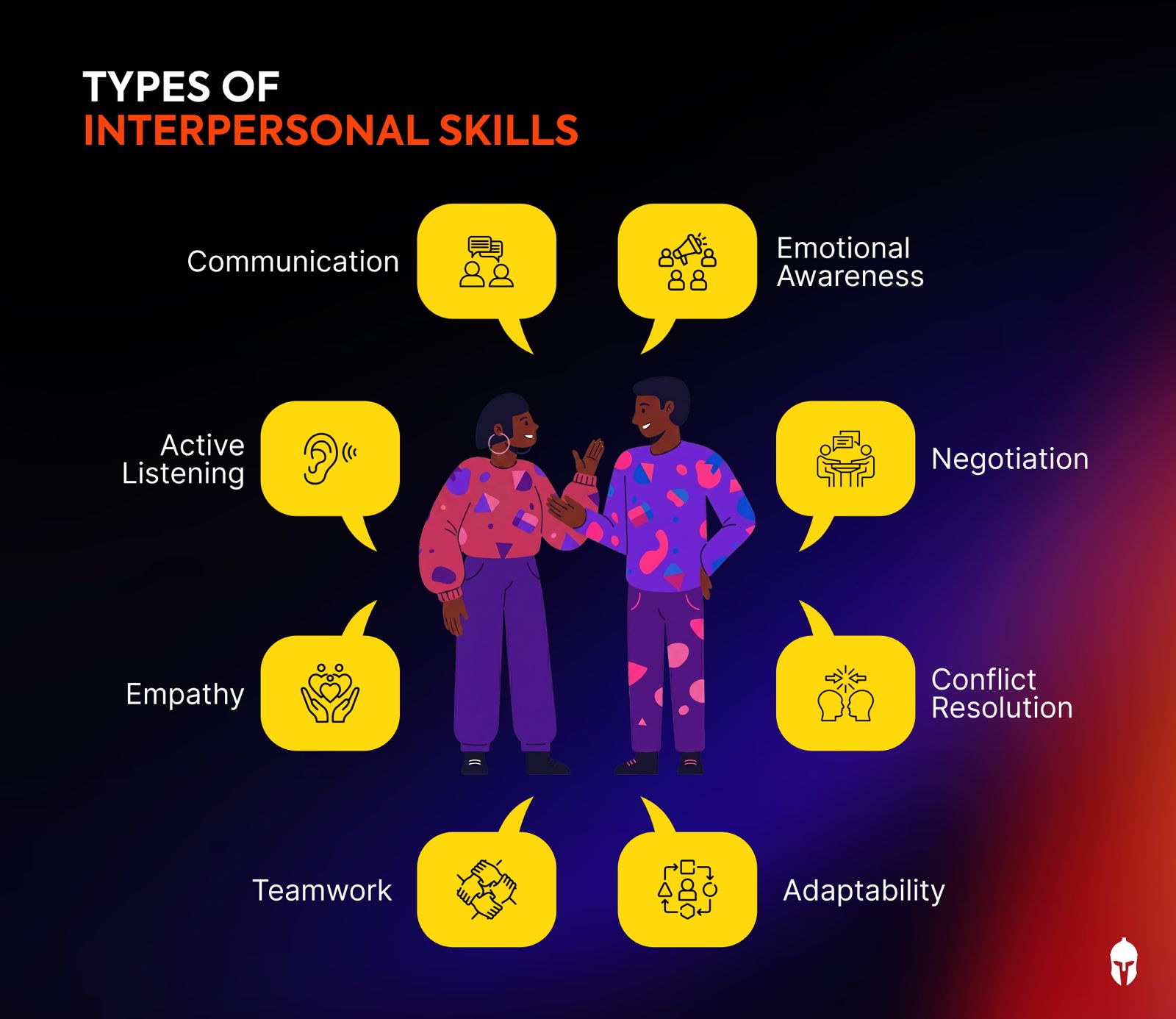
Types and Examples of Interpersonal Skills
These behaviours appear across almost every environment where people interact, whether during professional collaboration, disagreement, social situations, or everyday interaction.
Communication: expressing ideas clearly while adjusting tone, timing, and delivery based on the situation.
Listening: paying full attention instead of preparing a response before the other person has finished speaking.
Empathy: recognising what someone may be feeling and responding to more than just the surface-level words.
Teamwork: balancing personal preferences with what a group or shared objective actually requires.
Adaptability: adjusting approach when situations, personalities, or environments change unexpectedly.
Conflict resolution: addressing disagreement directly without escalating tension unnecessarily.
Negotiation: balancing your own position while remaining open to what the other person is trying to achieve.
Emotional awareness: recognising emotional responses early enough to respond deliberately instead of impulsively.
These behaviours rarely operate independently. In most real situations, several tend to work together at the same time.

Signs of Strong Interpersonal Skills
Strong interpersonal skills are usually easiest to recognise in everyday situations.
Listening Without Waiting to Speak
Many back-and-forths feel frustrating because one person is already preparing a reply before the other has finished talking. Important details get missed, responses feel disconnected, and the interaction becomes more about reacting than understanding.
Strong listeners stay focused long enough to understand what is actually being said. They ask follow-up questions naturally, allow pauses without rushing to fill them, and make the other person feel heard instead of managed.
Adjusting Communication Based on the Situation
The same tone does not work everywhere. A direct approach during a stressful meeting may feel harsh, while an overly casual response during a serious discussion can come across as dismissive.
People with strong communication awareness adjust naturally depending on the environment, the emotional state of the other person, and the emotional tone involved. They recognise when to slow down, soften their approach, or become more direct.
Staying Calm During Difficult Conversations
Disagreement becomes harder to manage when frustration takes over too quickly. Someone receives criticism and immediately becomes defensive. Someone stops listening halfway through feedback because they assume they already know where the discussion is heading.
Staying calm does not mean ignoring emotion. It means creating enough space between the reaction and the response to avoid making the situation worse.

Making People Feel Comfortable Around You
People generally relax around someone who feels attentive, consistent, and easy to speak to. Small behaviours matter here: remembering previous conversations, following through on simple commitments, or making eye contact instead of constantly checking a phone during discussion.
Trust usually develops through repeated behaviour, not polished communication.
Repairing Interactions After Tension or Misunderstanding
Not every conversation goes well. Messages come across differently than intended, tension builds unexpectedly, or awkward moments linger longer than they should.
Strong interpersonal skills also involve knowing how to recover afterwards. Acknowledging the awkwardness directly, clarifying what was meant, or following up after a difficult exchange often prevents small problems from becoming lasting ones.
Why Communication Feels Difficult for Some People
Difficulty in social situations is rarely about lacking charisma or being naturally introverted. More often, certain habits gradually make communication feel more tense or mentally exhausting than it needs to be.
Overthinking Creates Social Friction
When someone enters a conversation already rehearsing responses, monitoring how they are coming across, and worrying about awkward silences, the interaction becomes effortful for both people. The attention that should be going towards the other person is being consumed by internal management.
The irony is that trying too hard to appear natural produces exactly the social friction the person was hoping to avoid.
Avoidance Makes Communication Feel Harder
Avoiding disagreement, staying quiet during meetings, or putting off uncomfortable discussions may feel relieving in the moment, but the discomfort usually grows over time.
Someone who repeatedly avoids speaking up in group settings often becomes more self-conscious each time the opportunity returns. The same pattern appears after awkward social moments, especially when hesitation begins turning ordinary conversations into something that feels harder to start.
Emotional Reactivity Disrupts Communication
Many communication problems escalate because frustration, embarrassment, or defensiveness enters the conversation before either person has properly processed what was said.
A small piece of feedback turns into an argument. Someone interrupts halfway through a sentence because they assume criticism is coming. A disagreement becomes personal when the original issue was relatively minor.
The difficulty is often less about the topic itself and more about reacting before thinking clearly.
Digital Communication Removes Important Context
Text messages, emails, and direct messaging remove many of the signals people normally rely on during face-to-face conversation. Tone becomes harder to judge, pauses feel more noticeable, and short replies can appear irritated even when no frustration was intended.
A message that would sound neutral in person can feel cold or dismissive on a screen. Many misunderstandings today come less from poor intentions and more from missing context.
How to Develop and Improve Interpersonal Skills
Most communication habits improve the same way other practical skills do.
Pay More Attention to the Other Person
Many people focus so heavily on saying the right thing that they stop noticing how the other person is actually responding. Small cues such as hesitation, shorter replies, distracted body language, or changes in tone are easy to miss when attention stays fixed on managing your own performance.
Try shifting your attention back to the other person. Notice their tone, pauses, facial expressions, and whether they seem comfortable, distracted, or frustrated. People generally respond better when they feel listened to rather than managed or impressed. René Rodriguez, whose work explores behavioural psychology and communication, has also spoken about how people often confuse seeing with paying attention, especially during high-pressure interaction. Understanding the difference between empathy and sympathy also helps during emotionally charged conversations, especially when someone needs understanding more than reassurance.
Get More Comfortable With Minor Social Discomfort
Small moments of discomfort are part of almost every meaningful interaction. Introducing yourself first, asking a direct question, speaking earlier during a meeting, or addressing tension before it builds can all feel uncomfortable initially.
The more often you avoid these moments, the more difficult they usually become. Repeating them in small ways gradually makes them feel more manageable and less mentally draining over time.
Pause Before Reacting Emotionally
Back-and-forths often shift quickly when assumptions are made before the other person has finished explaining themselves. Frustration enters early, and small misunderstandings become more personal than they need to be.
Giving yourself a few extra seconds before replying can stop a discussion from becoming unnecessarily defensive. Some reactions feel instinctive even when they are shaped more by stress or previous experiences than the situation itself.

Improve How You Communicate Digitally
Messages carry far less context than face-to-face conversation. Short replies, delayed responses, or vague wording can easily create the wrong impression.
Before sending an important message, reread it as though you were receiving it yourself. Adding a little more clarity or warmth often prevents confusion that would otherwise take much longer to resolve later.
Build Confidence Through Repetition
Communication confidence rarely appears before experience. It usually develops after enough conversations, group discussions, awkward moments, and difficult exchanges have already happened.
The goal is not to handle every interaction perfectly. It is to become more familiar with situations that once felt uncomfortable, unpredictable, or difficult to navigate.
Interpersonal Skills in the Workplace
Workplace relationships are often shaped by small everyday behaviours: how someone handles disagreement during meetings, responds to pressure, listens to feedback, or speaks to colleagues when pressure or disagreement is involved.
These skills become most visible during situations such as:
Handling disagreement during meetings
Responding to difficult feedback
Communicating clearly under pressure
Managing tension within teams
Building trust over time
Others are usually more receptive to colleagues and leaders who stay composed during stressful situations, listen properly before responding, and make discussions feel productive instead of defensive. Professional relationships also tend to grow more naturally through consistency, attentiveness, and genuine interest than through forced networking or impression management. Discussions around workplace empathy from speakers also reinforce how strongly people respond when they feel properly listened to and understood.

Interpersonal Skills Improve Through Practice, Not Personality
Many people assume strong communicators are naturally confident or socially gifted. In reality, most communication habits improve through repeated exposure to everyday situations that gradually become easier to handle with experience.
Someone who once avoided difficult discussions may eventually become more comfortable addressing tension directly. A person who struggled in group settings may become more confident after enough meetings, introductions, or unfamiliar conversations stop feeling new. Small behavioural adjustments, practised consistently, usually matter more than trying to find the perfect thing to say.
Frequently Asked Questions